



Vestibular Therapy in Norwalk, CT
Vestibular therapy in Norwalk, CT is specialized physical therapy for people who feel dizzy, off-balance or sick with motion, from daily commuters to retirees. Licensed physical therapists assess your inner ear and balance systems, then use repositioning maneuvers, gaze exercises and balance drills. Learn about our vestibular rehabilitation service, start through direct access, or pair care with gait and balance training in Norwalk. Request an appointment when you are ready.

Your Trusted, In-Network Vestibular Rehabilitation
Our team works with most major insurance plans, plus Medicare and Medicaid. Workers' compensation also applies if a job injury led to your dizziness. We confirm your coverage before you start, and most patients owe only their usual copay.

No Prescription or Referral Required
You do not have to wait for a doctor's note to treat vertigo. Connecticut's direct access law lets you book a licensed physical therapist on your own. Because some insurance plans set their own rules, we review yours before scheduling.
What Is Vestibular Rehabilitation and How Does It Work?
Your balance depends on signals from your inner ear, eyes and body all agreeing. Vestibular rehabilitation uses guided exercise to help your brain sort out mixed signals after an inner ear problem or head injury. Many Norwalk commuters come to us when train rides, highway driving or scrolling a phone bring on nausea and spinning. Read more about our vestibular therapy and neurological rehabilitation service.
What Happens at Your First Visit
Sessions take place at our clinic at 499B Westport Avenue. We start with a conversation about when your dizziness began and what sets it off. Your therapist then tests eye tracking, positional responses, standing balance and walking speed. You get a plain-language summary and your first exercises to try at home.
Dizziness and Neurological Conditions We Help
- Benign paroxysmal positional vertigo (BPPV)
- Visual vertigo triggered by screens, crowds or busy stores
- Motion sickness that lingers after travel
- Persistent postural-perceptual dizziness (PPPD)
- Inner ear inflammation such as labyrinthitis
- Post-concussion dizziness and headaches
- Dizziness related to vestibular migraine
- Imbalance after a stroke or brain injury
- Unsteady walking with multiple sclerosis
Common Approaches We Use to Calm Vertigo
Repositioning Maneuvers for BPPV
When displaced inner ear crystals are the cause, a short sequence of head and body movements can guide them back into place. Your therapist first tests which ear canal is involved, so the maneuver fits your case.
Visual and Motion Desensitization
Gradual exposure to busy patterns, moving scenes and head turns teaches your brain to tolerate them. We start gently and build up, which often makes car trips and crowded places easier.
Gaze Stability Training
Simple eye and head exercises help your vision stay clear while you move. These drills take only a few minutes and fit easily into a workday or a lunch break.
Who Benefits From Vestibular Physical Therapy?
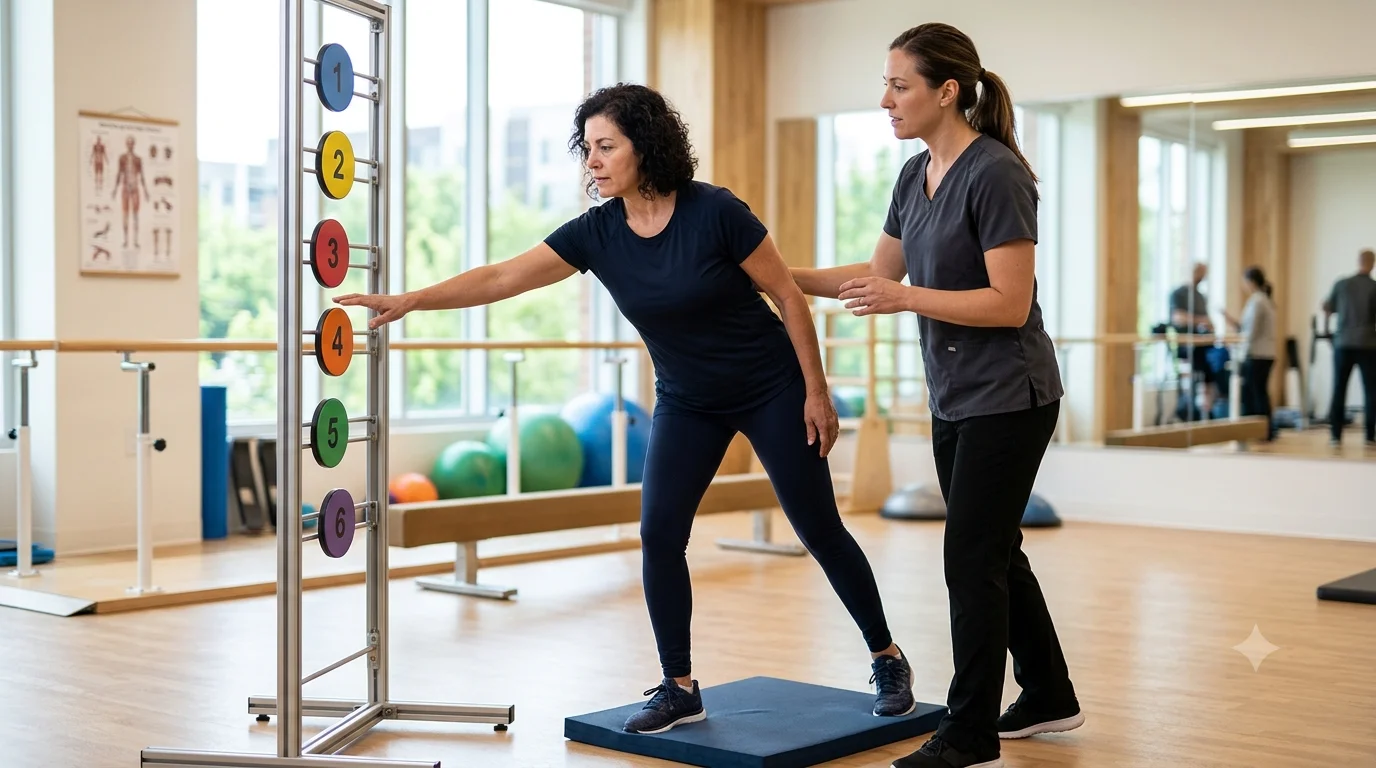
Adults of any age can benefit, from young professionals with post-concussion symptoms to older adults who feel unsteady on stairs. If falls are a concern, our gait and balance training program adds focused walking work. Patients healing from hip or knee surgery who also feel dizzy can combine this care with joint replacement therapy. Neck stiffness that feeds dizziness may be addressed by our orthopedic care team.
What Recovery Usually Looks Like
Most people attend one or two sessions per week. Positional vertigo often settles quickly, sometimes in a visit or two. Other vestibular problems usually improve over four to eight weeks with steady home practice. Your therapist tracks your symptoms and balance measures so you can see your progress.
Why Choose Our Vestibular Therapy Team?
- Licensed physical therapists who evaluate your whole balance system, not just symptoms
- Private, one-on-one sessions focused on your goals
- Weekday hours from 8:00am to 7:00pm that work around commuting schedules
- Home programs built to fit into a busy day
- Access to our full physical therapy in Norwalk services under one roof
- Support through workplace injury rehabilitation when dizziness follows a job injury
- Insurance verification handled before your first appointment
- A local option for Norwalk, Westport, Wilton, Darien and New Canaan
Explore Our Clinic Services
Explore the range of services available at SportsMed Physical Therapy in Norwalk, CT:
- Physical Therapy
- Hand & Occupational Therapy
- Women's Health / Pregnancy
- Vestibular Therapy & Neurological Rehabilitation
- Gait & Balance Training
- Workplace Injury Rehabilitation
- Joint Replacement Therapy
- Orthopedic Care
- Return to Sport
Looking for this service at another clinic? See Vestibular Therapy in Bridgeport, CT, Vestibular Therapy in Stamford, CT, Vestibular Therapy in West Haven, CT, Vestibular Therapy in Hamden, CT, or view all of our Connecticut locations.
Get Started With Your Recovery Today
Don't let pain or limited movement hold you back. Request an appointment online or call (475) 470-0400. Visit us at 499B Westport Avenue, Norwalk, CT 06851. Find a location near you.
Hours
Monday to Friday, 8:00am to 7:00pm
Saturday and Sunday, closed
Vestibular Therapy in Norwalk, CT: Frequently Asked Questions
What is the fastest way to stop vertigo?
If your vertigo comes from BPPV, a repositioning maneuver performed by a licensed physical therapist often brings relief quickly, sometimes in one or two visits. Other causes, such as inner ear inflammation, respond to gaze and balance exercises over several weeks. A proper evaluation shows which approach fits your symptoms.
Can I see a vestibular therapist in Norwalk, CT without a referral?
Yes. Connecticut's direct access law means you can book with a licensed physical therapist without a prescription. A few insurance plans still require a doctor's referral to pay, so we check your plan first. Your first visit covers your history, eye movement tests and balance testing.
How much does vestibular therapy cost with insurance?
Your cost depends on your plan, but most patients pay only their regular copay per session. We accept most major insurance plans, Medicare, Medicaid and workers' compensation. Our team verifies your benefits before treatment begins, so you know what to expect ahead of time.
Can vestibular therapy help motion sickness?
It often can. Motion sensitivity happens when your brain struggles to match what your eyes see with what your inner ear feels. Habituation exercises gradually expose you to triggering motion in a controlled way. Over several weeks, many people find car rides, trains and busy places easier to handle.
What should I wear to my first vestibular therapy visit?
Wear comfortable clothing and supportive shoes you can walk and balance in. If you use glasses for distance, bring them, since eye tests are part of the exam. You may want someone to drive you home if positional testing tends to make you dizzy.
Where is the Norwalk vestibular therapy clinic?
You will find us at 499B Westport Avenue, Norwalk, CT 06851. We are open Monday to Friday, 8:00am to 7:00pm. Call (475) 470-0400 to book an evaluation. We also see patients from Westport, Wilton, Darien, New Canaan and Weston.